// application note
AN0003 Programming STM32 microcontrollers over SPI with the Binho Pulsar
The system bootloader programmed into the ROM of STM32 microcontrollers offers an SPI interface on many families, allowing internal flash memory to be erased, programmed and verified with no debug probe attached. This application note describes that interface, the connections required between a Binho Pulsar USB host adapter and the target, and the procedure for programming a device. It gives particular attention to the framing rule that separates a working host implementation from one that corrupts data, and to a method of driving reset from spare chip selects when no general-purpose pins are free. Measured results are given for an STM32H503 on a NUCLEO-H503RB board.
- Protocols
- SPI
- Topics
- STM32 Bootloader Flashing
- Revision
- Rev 1.1 · September 3, 2026
// outcomes
What you'll walk away with
This document describes:
- the structure of the SPI system bootloader protocol, including the acknowledgement handshake and the rule that governs how a reply is read
- the connections required between a Binho Pulsar and an STM32 target, including a method of driving NRST and BOOT0 from spare chip selects
- the procedure for identifying, erasing, programming and verifying a device
- a method for confirming from outside the programming tool that the target is running the newly programmed image
- the accompanying reference utility, which drives either a Pulsar or a Supernova
It does not cover programming over UART, USB, CAN, I2C or I3C; option-byte programming; readout protection, which the ROM bootloader on the tested part does not offer over this interface; or production programming fixtures. For I3C see AN0001, and for I2C see AN0002.
// background
Background
The system bootloader programmed into the ROM of every STM32 microcontroller provides a means of programming internal flash memory over a serial interface, without a debug probe and without any user code present on the device. The interfaces offered by the bootloader vary by device and are listed per part number in AN2606.
SPI appears on that list for many families. It is the fastest of the three interfaces this series has covered when writing, and it is the one whose host implementation is easiest to get subtly wrong. The reason is a single design decision: the value the target sends when it has nothing to say is an ordinary data value, not a reserved one. A host that treats it as padding passes every identification command and then corrupts flash reads.
This note is the SPI counterpart to AN0001, which covers I3C, and AN0002, which covers I2C. The command set is nearly the same on all three. What differs is the framing, and on this bus the framing is what matters.
// applicable devices
Applicable devices
The SPI system bootloader is not specific to one family. The pins it uses differ per part and per SPI instance, and all of them are given in AN2606. They are not the pins a board routes to an Arduino-style SPI header, which is an application mapping of the same peripheral.
| Family | Example part | Bootloader SPI interfaces | Basis |
|---|---|---|---|
| STM32H5 | STM32H503 | SPI1, SPI2, SPI3 | Tested for this document |
| STM32H5 | STM32H563 | Per AN2606 | AN2606, not tested |
| STM32G0, G4 | none | Per AN2606 | AN2606, not tested |
| STM32L4, L5 | none | Per AN2606 | AN2606, not tested |
| STM32U5 | none | Per AN2606 | AN2606, not tested |
Only the STM32H503 was exercised on hardware, and only its SPI2 instance. The pins and the supported command list must be read from AN2606 for the part in hand before any of this document's commands are issued.
// what's covered
What's covered in the note
- 01 Introduction
- 02 System overview
- 03 Hardware setup
- 04 Software setup
- 05 Bootloader protocol
- 06 Programming procedure
- 07 Confirming the update on the target
- 08 Reference utility
- 09 Measured results
- 10 Troubleshooting
The full procedure, measured results, and reference code are in the PDF and the assets archive.
// materials
What you'll need
 Binho Supernova USB host adapter for I3C, I2C, SPI & UART View product
 Binho Pulsar USB host adapter for I2C, SPI, UART, GPIO & CAN-FD View product
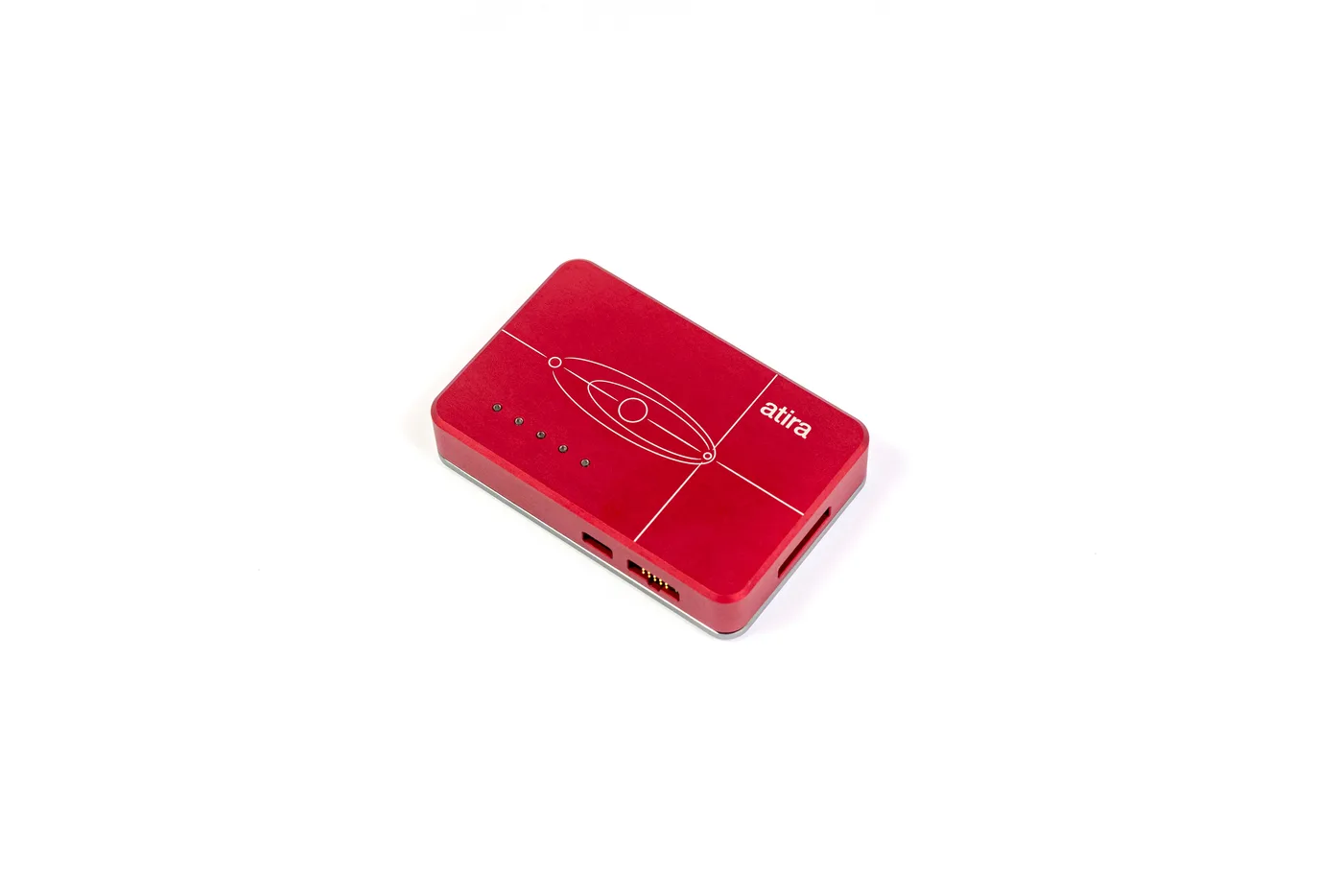 Binho Atira All-in-one USB debug probe View product
// trusted by engineering teams at


+ hundreds more
// related notes
Related Application Notes
// newsletter
Get new application notes
New notes, firmware releases, and tool updates from Binho. No spam, unsubscribe anytime.
Put it on the bench
Every step in AN0003 was run on Binho Supernova, Binho Pulsar and Binho Atira. Get the hardware to reproduce it, or talk to our engineers about your SPI bring-up.