// application note
AN0018 Moving a bus from SMBus at 3.3 V to I3C at 1.8 V with the Binho Supernova
A device that starts on an SMBus bus at 3.3 V and moves to I3C at 1.8 V needs the host to find it, check that nothing SMBus-only is left on the bus, lower the bus voltage and assign it a dynamic address. The Supernova does all of this from one I3C port. This note supplies a script that runs the five steps, with SETDASA or ENTDAA for the last one, and shows it on a bench where a second Supernova plays the I3C device: 20 of 20 runs with SETDASA and 20 of 20 with ENTDAA, with the bus high level measured at 3.34 V before the change and 1.79 V after it.
- Products
- Binho Supernova
- Topics
- SMBus to I3C
- Revision
- Rev 1.0 · November 6, 2026
// outcomes
What you'll walk away with
This document covers:
- the five steps of the sequence and the pyCosmicSDK call behind each one
- the wiring, and where the bus pull-ups must go so that they follow the voltage change
- a script that runs the sequence, with SETDASA or ENTDAA as the address assignment
- measured results on a bench with a Supernova as the I3C device
It does not cover the SMBus to I3C Basic detection flow of the PCI-SIG out-of-band management specification (Hot-Join, ARP, the SMBus reset), which AN0014 covers, or MCTP and NVMe-MI messages.
// background
Background
Some devices power up as SMBus targets at 3.3 V and can move to I3C at 1.8 V. The host decides when: it first makes sure that every device left on the bus can follow, then lowers the bus voltage and assigns dynamic addresses. A device that only speaks SMBus would not survive the move, so the host stays in SMBus mode if it finds one.
The Supernova's I3C port speaks SMBus (legacy I2C) and I3C on the same two pins, and its voltage is set from software. The whole sequence therefore runs from one port and one script.
// applicable devices
Applicable devices
| Role | Part | Identifier | Basis |
|---|---|---|---|
| Controller | Binho Supernova | hardware revision C, firmware 4.6.2, I3C HV port | measured, this document |
| Controller | Binho Supernova | firmware 4.6.0 or later | expected: every call used is in 4.6.0 |
| I3C device | Binho Supernova as I3C target | hardware revision C, firmware 4.6.2 | measured, this document |
| I3C device | any device that answers on SMBus at a static address and supports SETDASA or ENTDAA | not measured |
// what's covered
What's covered in the note
- 01 Introduction
- 02 System overview
- 03 Hardware setup
- 04 Software setup
- 05 Procedure
- 06 Measured results
- 07 Troubleshooting
The full procedure, measured results, and reference code are in the PDF and the assets archive.
// materials
What you'll need
 Binho Supernova USB host adapter for I3C, I2C, SPI & UART View product
// our edge
We don't just follow the I3C spec.
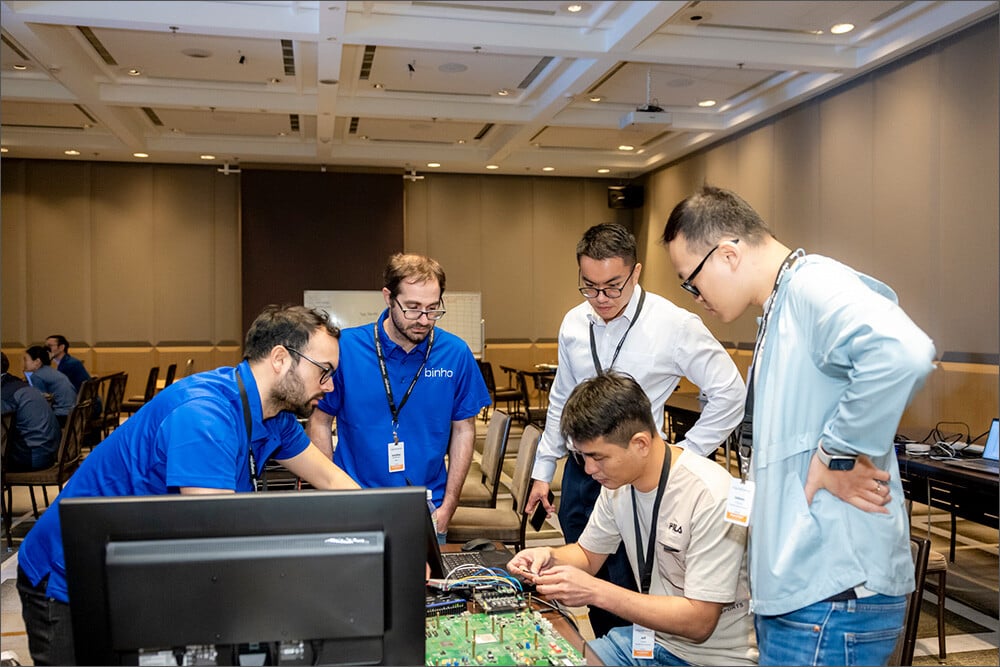
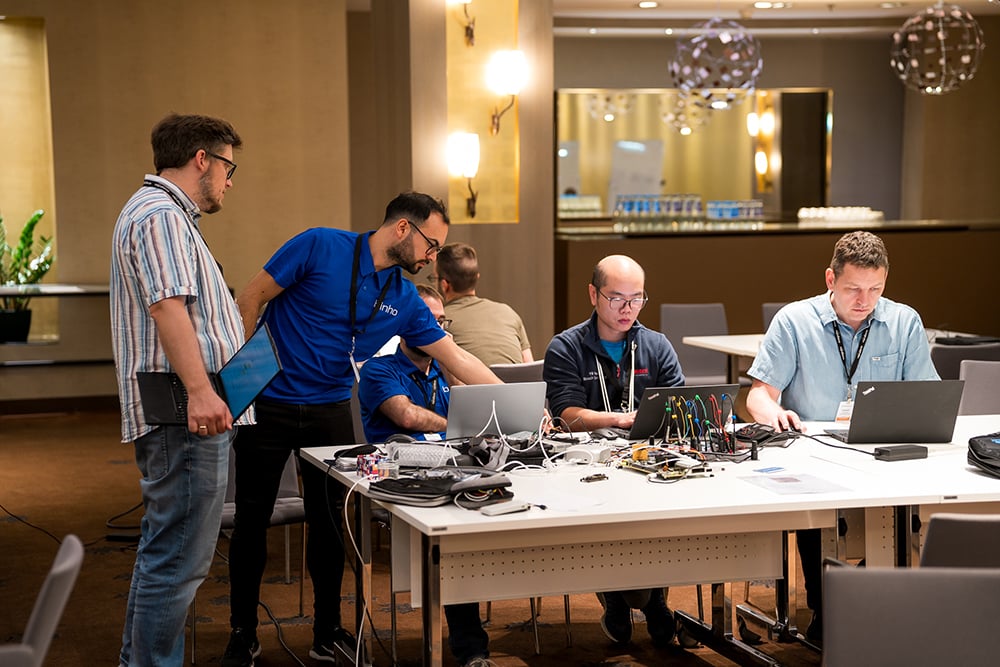
We don't watch from the sidelines. Plugfest after plugfest, our team is in the room where vendor I3C implementations come together — finding edge cases, debugging quirks, and validating real silicon against the spec.
// track record
We've been doing this for years.
Long enough to know where the gotchas live.

// 01 · standards
We help write the spec.
Binho is a MIPI Alliance Contributor Member, actively shaping I3C — a foundational protocol for cutting-edge embedded systems.
// 02 · tools
We build the tools.
200+ semiconductor companies use Binho tools to develop, validate, and ship devices with I3C protocol support.
// 03 · plugfests
We prove it in the field.
We've verified our tools at the past 5 MIPI I3C Plugfests — and helped others verify theirs too.
// trusted by engineering teams at


+ hundreds more
// related notes
Related Application Notes
Building a CMIS I3C target on a Microchip dsPIC33AK and testing it with the Binho Supernova
Streaming images from an STMicroelectronics VD55G1 over I3C with the Binho Supernova
Reading a DDR5 SPD hub and driving Corsair RGB over the DIMM sideband with the Binho Supernova
// newsletter
Get new application notes
New notes, firmware releases, and tool updates from Binho. No spam, unsubscribe anytime.
Put it on the bench
Every step in AN0018 was run on the Binho Supernova. Get the hardware to reproduce it, or talk to our engineers about your I2C/I3C bring-up.