// application note
AN0014 Single-port I2C/SMBus/I3C operation for NVMe-MI on Binho Supernova
Many SMBus and MCTP devices hold SCL low while they prepare a response. The Supernova's I3C engine cannot wait for that, so on its I3C port such a target used to lose bits. Adapter firmware 4.6.0 and pyCosmicSDK 1.6.0 add a mode in which legacy I2C transfers on the I3C port wait for the target, up to the SMBus 35 ms timeout. This note explains the mode, supplies a script that reads and writes a stretching target with it, and supplies the firmware of the reference target used to measure it: 3600 of 3600 reads correct at 100 kHz and 400 kHz over three runs, with the target stretching from 0 to 30 ms, and every stretched read correct up to the mode's ceiling of about 750 kHz. The script also runs the SMBus to I3C Basic detection flow of the PCI-SIG out-of-band management specification as far as the adapter can.
- Products
- Binho Supernova
- Topics
- NVMe-MI / MCTP
- Revision
- Rev 1.0 · November 6, 2026
// outcomes
What you'll walk away with
This document covers:
- what the clock-stretching mode changes, and what it refuses while it is on
- the SCL rates it runs at and how close they come to the request
- a script that reads and writes a stretching target through the mode
- a reference target that stretches for a configurable time, and its firmware
- measured results against that target
- the SMBus to I3C Basic detection flow used for NVMe-MI, and which of its steps the adapter performs
It does not cover SMBus framing beyond the PEC check of an ARP Get UDID (block read and write, quick command), MCTP or NVMe-MI messages, or the Supernova's separate I2C port.
// background
Background
An I2C target may hold SCL low after it acknowledges its address, to gain time before it answers. The controller must wait until SCL is released. The I2C specification calls this clock stretching, and SMBus allows it for up to 35 ms (tTIMEOUT). SMBus and MCTP devices use it routinely: a management controller that is fetching a value holds the clock until the value is ready.
The Supernova's I3C port can address legacy I2C targets on the same bus as I3C devices. Its I3C engine, however, keeps clocking while a target holds SCL low, so a stretching target misses bits and the transfer returns wrong data or no acknowledge. Adapter firmware 4.6.0 and pyCosmicSDK 1.6.0 add a mode that fixes this for legacy I2C transfers on the I3C port.
// applicable devices
Applicable devices
| Role | Part | Identifier | Basis |
|---|---|---|---|
| Controller | Binho Supernova | hardware revision C, firmware 4.6.1, I3C HV port | measured, this document |
| Controller | Binho Supernova | firmware 4.5.1 or earlier | refuses the mode with FW_UNSUPPORTED_COMMAND |
| Controller | Binho Pulsar | any | not applicable: the Pulsar has no I3C port |
| Reference target | Microchip PIC18F16Q20 Curiosity Nano | firmware stretch_target_pic18q20.c |
measured, this document |
// what's covered
What's covered in the note
- 01 Introduction
- 02 System overview
- 03 Hardware setup
- 04 Software setup
- 05 The clock-stretching mode
- 06 Procedure
- 07 The SMBus to I3C Basic detection flow
- 08 Measured results
- 09 Troubleshooting
The full procedure, measured results, and reference code are in the PDF and the assets archive.
// materials
What you'll need
 Binho Supernova USB host adapter for I3C, I2C, SPI & UART View product
// our edge
We don't just follow the I3C spec.
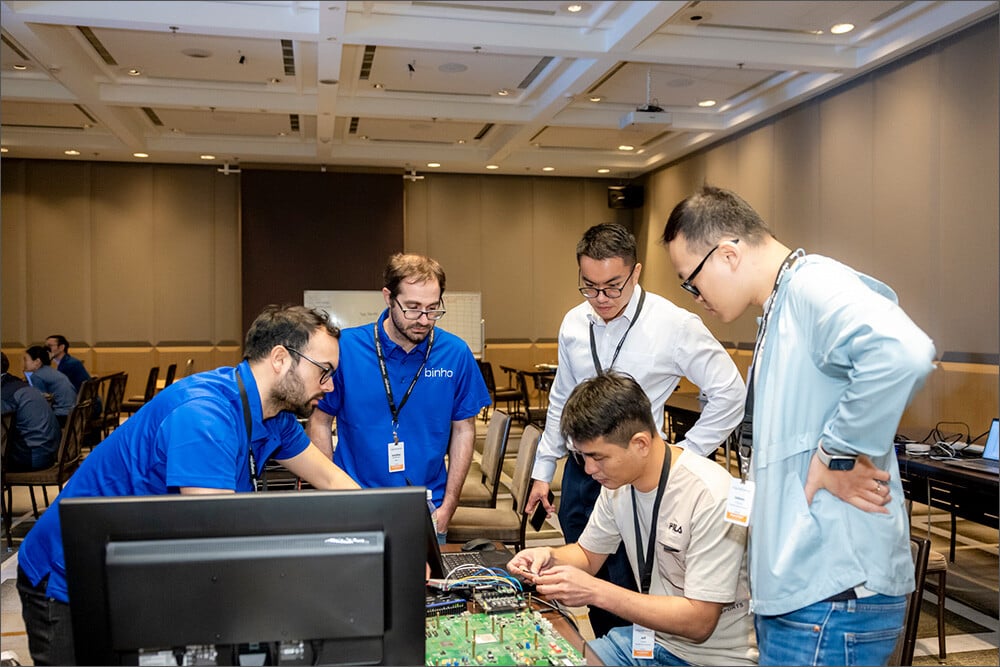
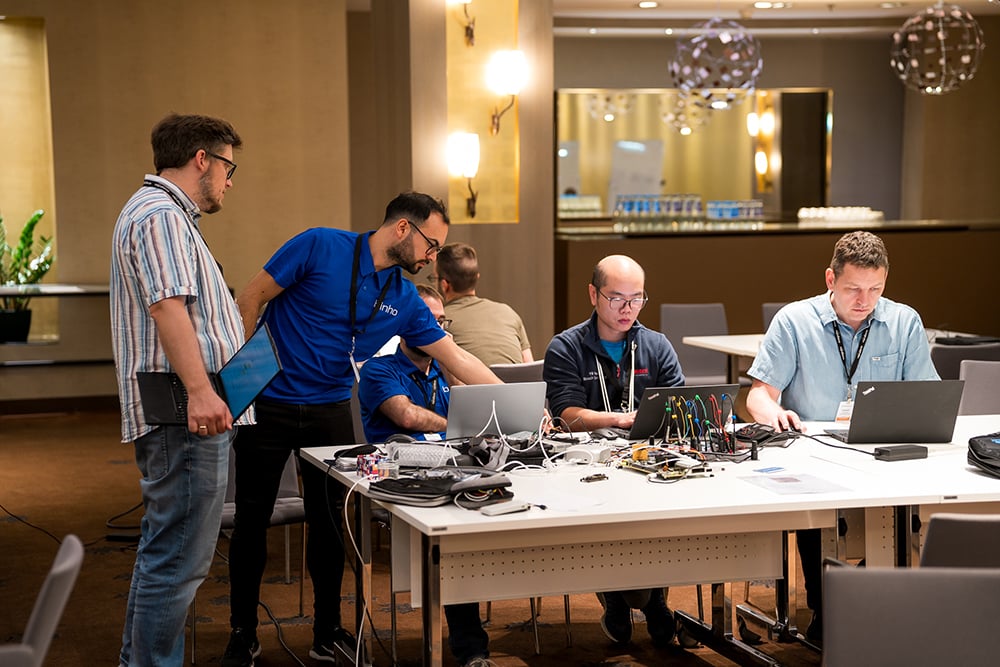
We don't watch from the sidelines. Plugfest after plugfest, our team is in the room where vendor I3C implementations come together — finding edge cases, debugging quirks, and validating real silicon against the spec.
// track record
We've been doing this for years.
Long enough to know where the gotchas live.

// 01 · standards
We help write the spec.
Binho is a MIPI Alliance Contributor Member, actively shaping I3C — a foundational protocol for cutting-edge embedded systems.
// 02 · tools
We build the tools.
200+ semiconductor companies use Binho tools to develop, validate, and ship devices with I3C protocol support.
// 03 · plugfests
We prove it in the field.
We've verified our tools at the past 5 MIPI I3C Plugfests — and helped others verify theirs too.
// trusted by engineering teams at


+ hundreds more
// related notes
Related Application Notes
// newsletter
Get new application notes
New notes, firmware releases, and tool updates from Binho. No spam, unsubscribe anytime.
Put it on the bench
Every step in AN0014 was run on the Binho Supernova. Get the hardware to reproduce it, or talk to our engineers about your I2C/I3C bring-up.