// usb-to-i3c adapter
The USB-to-I3C adapter, done right.

The Binho Supernova interfaces your PC with any MIPI I3C bus: quality hardware, desktop software worth using, and a modern SDK, from the team that helps develop the spec.
Windows, macOS, Linux · Royalty-free SDK · US-based engineering support
// capabilities
Everything a host adapter should do. And more.
The Supernova is the I3C controller on your bus, driven from your PC over USB. No firmware, no target board, no microcontroller in the loop.
// init the bus
Bring up the bus
Assign dynamic addresses and enumerate every I3C target on the bus in one click.
// read / write
SDR and HDR transfers
Compose SDR and HDR-DDR transfers and watch them land in a live log, byte for byte.
// ibi + ccc
IBI, Hot-Join, CCCs
Catch in-band interrupts and hot-join events live, and issue any Common Command Code.
// both roles
Controller or target
Drive the bus as the controller, or attach as a target to validate silicon. Same hardware.
- Max clock
- 12.5 MHz (push-pull)
- Spec
- I3C Basic v1.0–v1.2
- Modes
- SDR · HDR-DDR
- Features
- IBI · Hot-Join · all CCCs
- Role
- Controller or target
- Logic levels
- 0.8–3.3 V
- Host interface
- USB 2.0 Full Speed
- Bandwidth
- 12 Mbps
- Connector
- USB Type-C
- DUT power
- 0.8–3.3 V, programmable
- GPIO
- 6 dedicated pins
- Other protocols
- I²C · SPI · UART
// interfaces
Drive it the way you work.
Point and click, script it, or build it into your own tools. One adapter, three first-class interfaces, all on the same hardware.
// point & click
Mission Control 3
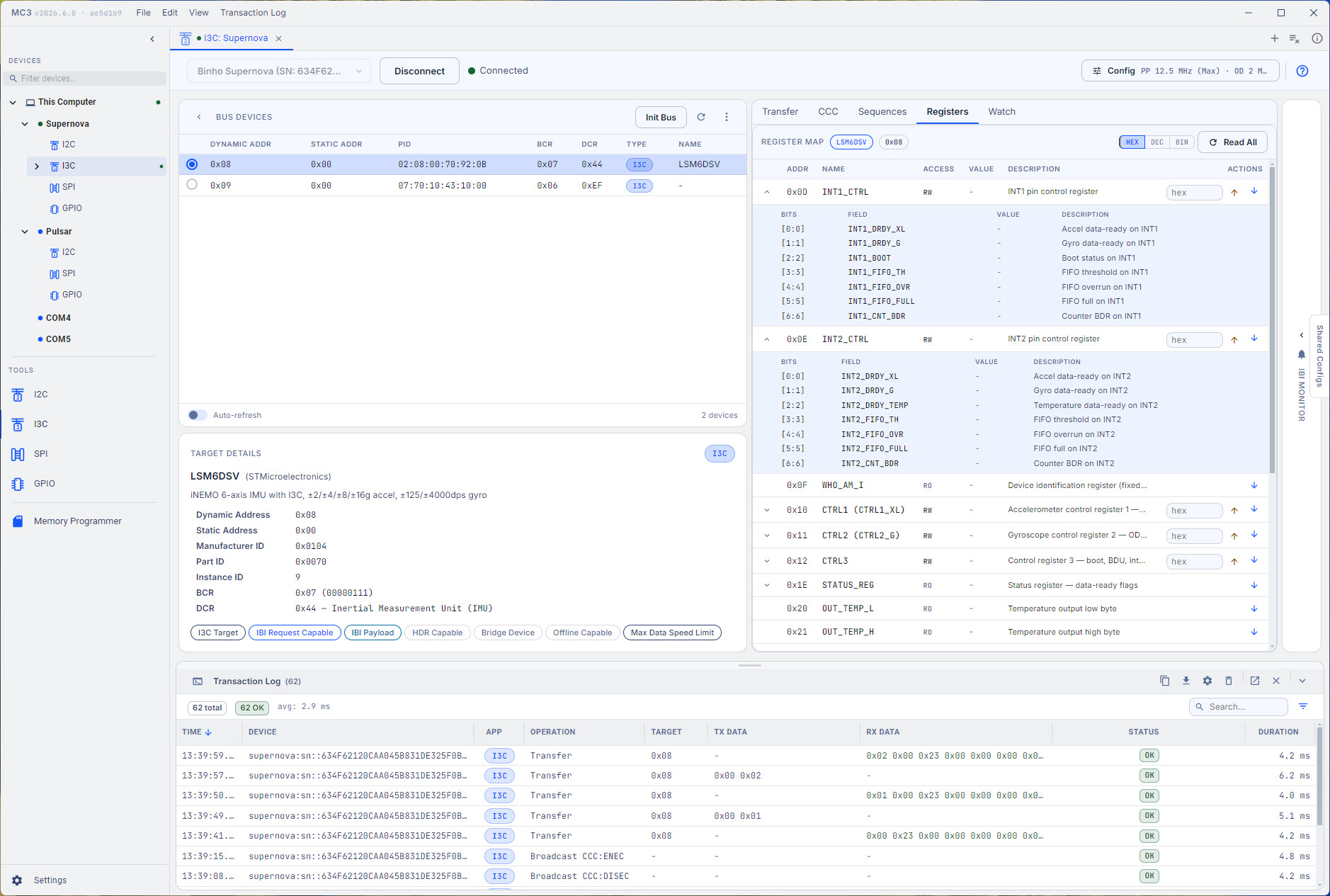
Initialize the bus, run I3C transfers, and watch interrupts, in a desktop app or right in your browser. No code required.
// automate
Python
Official PyPI packages put the whole device in your test scripts and CI, in the language your team already automates with.
// integrate
Cosmic SDK
Native SDKs to embed the Supernova in production test systems and factory software, across four languages.
// mission control 3
Point, click, and drive I3C. No code.
Use our cross-platform desktop app to initialize the bus, assign dynamic addresses, run transfers, and watch in-band interrupts and hot-join events live. Runs on Windows, macOS, Linux, and even in the browser.
// ai agents
Give your AI agent hands on real hardware.
Point Claude, or any agent, at the Supernova’s open SDK. It initializes the I3C bus, assigns addresses, runs transfers, and verifies on real silicon, not a datasheet.






// the prompt
Use the Supernova to initialize the I3C bus at 12.5 MHz and tell me which devices support HDR modes.
One sentence in. The agent learns the API, runs it on real silicon, and reports back.
// get the supernova
Binho Supernova
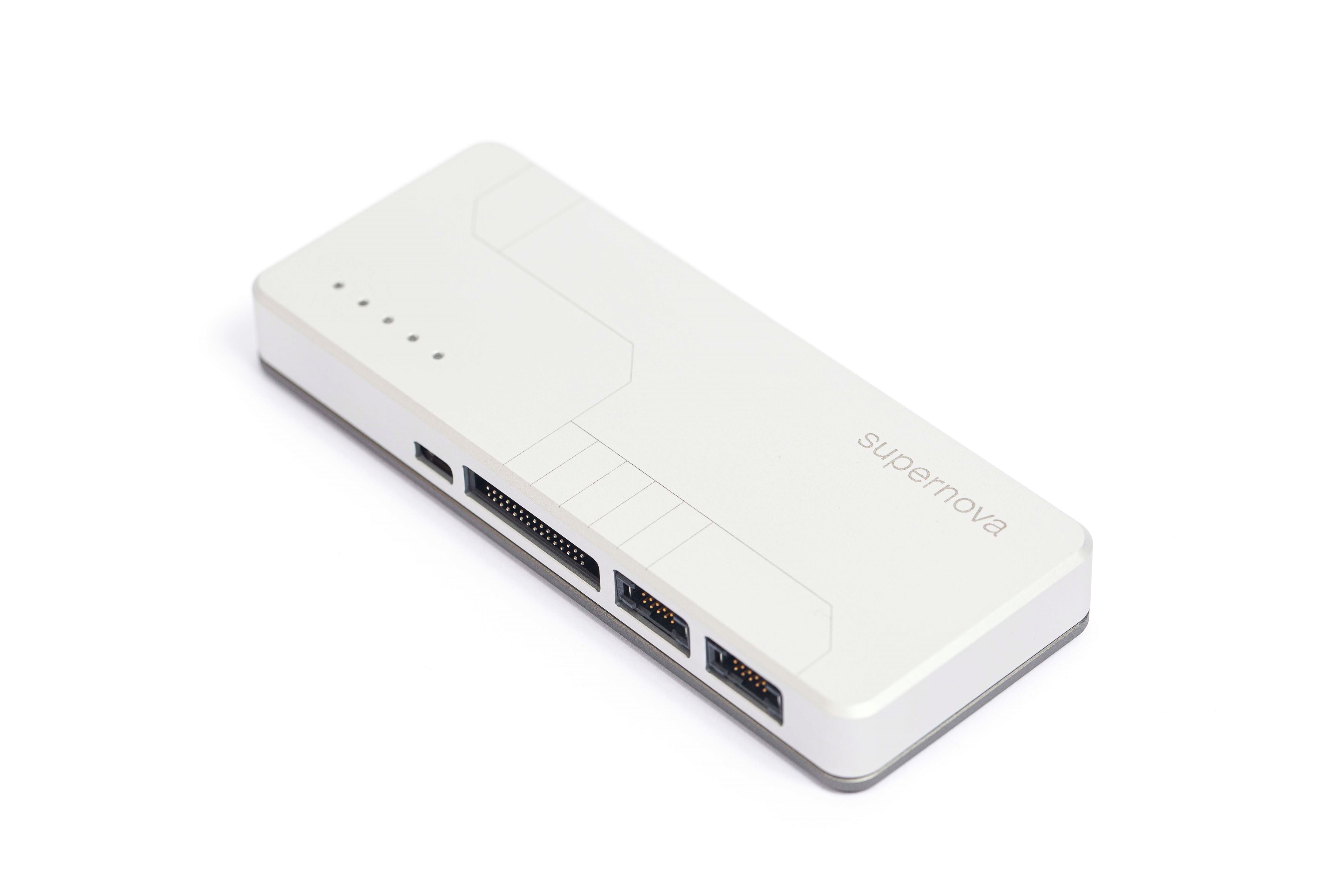
The flagship multi-protocol USB host adapter: MIPI I3C as controller or target, plus I²C, SPI, and UART on dedicated pins, in a machined-aluminum enclosure.
// hardware highlights
Engineered down to the details.
Small hardware decisions that make the Supernova quick to bring up and easy to design in.
Built-in mounting holes
Bolt it straight into a test fixture or production jig.
Down to 0.8 V
Reaches low-voltage I3C rails from 0.8 to 3.3 V that other adapters can't.
Controller or target
Drive the bus, or emulate a device, on the same hardware.
Programmable DUT power
Set the downstream supply to your target, powered over USB.
// usb-to-i3c, explained
How a USB-to-I3C adapter works.
A USB-to-I3C adapter lets your PC talk directly to a MIPI I3C bus. Plug it into a USB port and it becomes the I3C controller: it assigns dynamic addresses, runs SDR and HDR transfers, and surfaces in-band interrupts and hot-join events, straight to your screen. No microcontroller to program, no eval board to wire up, and no firmware to maintain.
// key considerations
Spec coverage
Devices on the market implement different versions of the specification: v1.0, v1.1.1, and v1.2. The tool has to match the revision your silicon targets.
IBI and Hot-Join
In-band interrupts and hot-join are optional in the specification, yet a critical part of most real implementations. The adapter has to handle them, not just basic reads.
Low-voltage rails
Modern I3C parts run at 1.2 V, 1.0 V, even 0.8 V. A fixed-voltage adapter simply can't reach them.
Mixed I²C and I3C
Most real buses are mixed. The adapter needs to handle legacy I²C targets alongside I3C, on the same lines.
The software is the product
Most adapters treat software as an afterthought. For a protocol as intricate as I3C, a real GUI and SDK save more time than any spec line.
// our edge
We don't just follow the I3C spec. We help develop it.
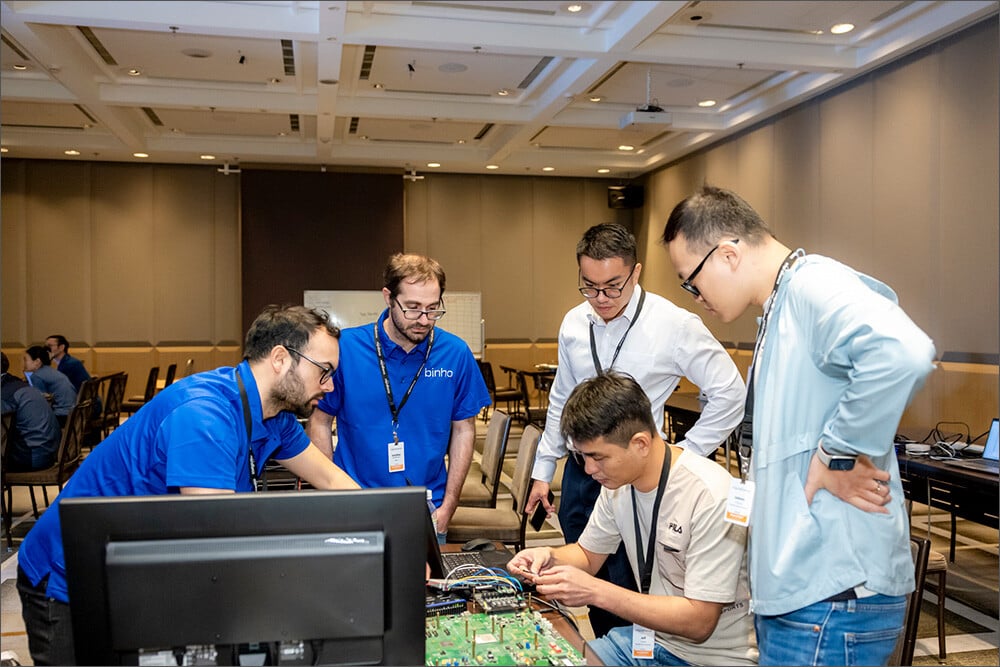
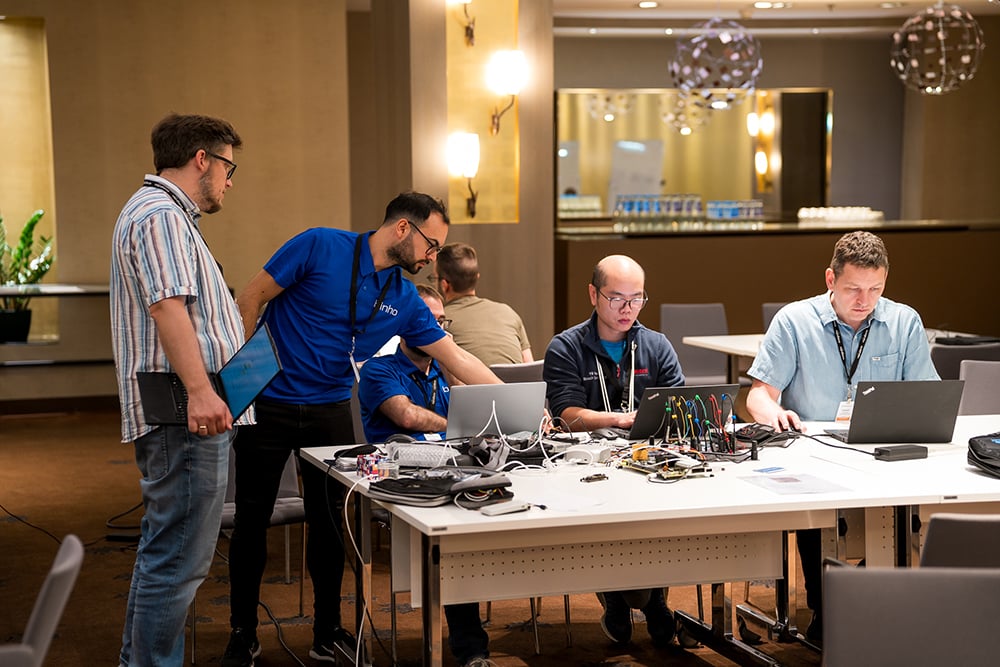
We don't watch from the sidelines. Plugfest after plugfest, our team is in the room where vendor I3C implementations come together, finding edge cases, debugging quirks, and validating real silicon against the spec.
// collaborations
Beyond the tools.
Our work lives inside the I3C industry's dev kits, app notes, and demos.

Bundled with the PIC18-Q20 Curiosity Nano.
As an official Microchip Development Tool Partner, we ship our I3C Protocol Analyzer plugin for Saleae Logic with every PIC18-Q20 Curiosity Nano dev kit — Microchip's lowest-cost I3C Target MCU board includes a free 45-day license, bundled directly with the hardware.
Read the announcement
Featured in their I3C application note.
AN5879 — Introduction to I3C for STM32H5 series MCU — is the 64-page document STMicro hands to every developer adopting I3C on STM32. The decoded I3C waveforms throughout the document are captures from our protocol analyzer.
View AN5879 (PDF) Powering their live I3C demo.
Microchip Try runs an interactive I3C session on a real PIC18F16Q20 board, accessible to anyone in the world via the web. Our Supernova USB-to-I3C controller is the device executing every transaction the demo issues.
Try the demo
MEMS sensor evaluation platform.
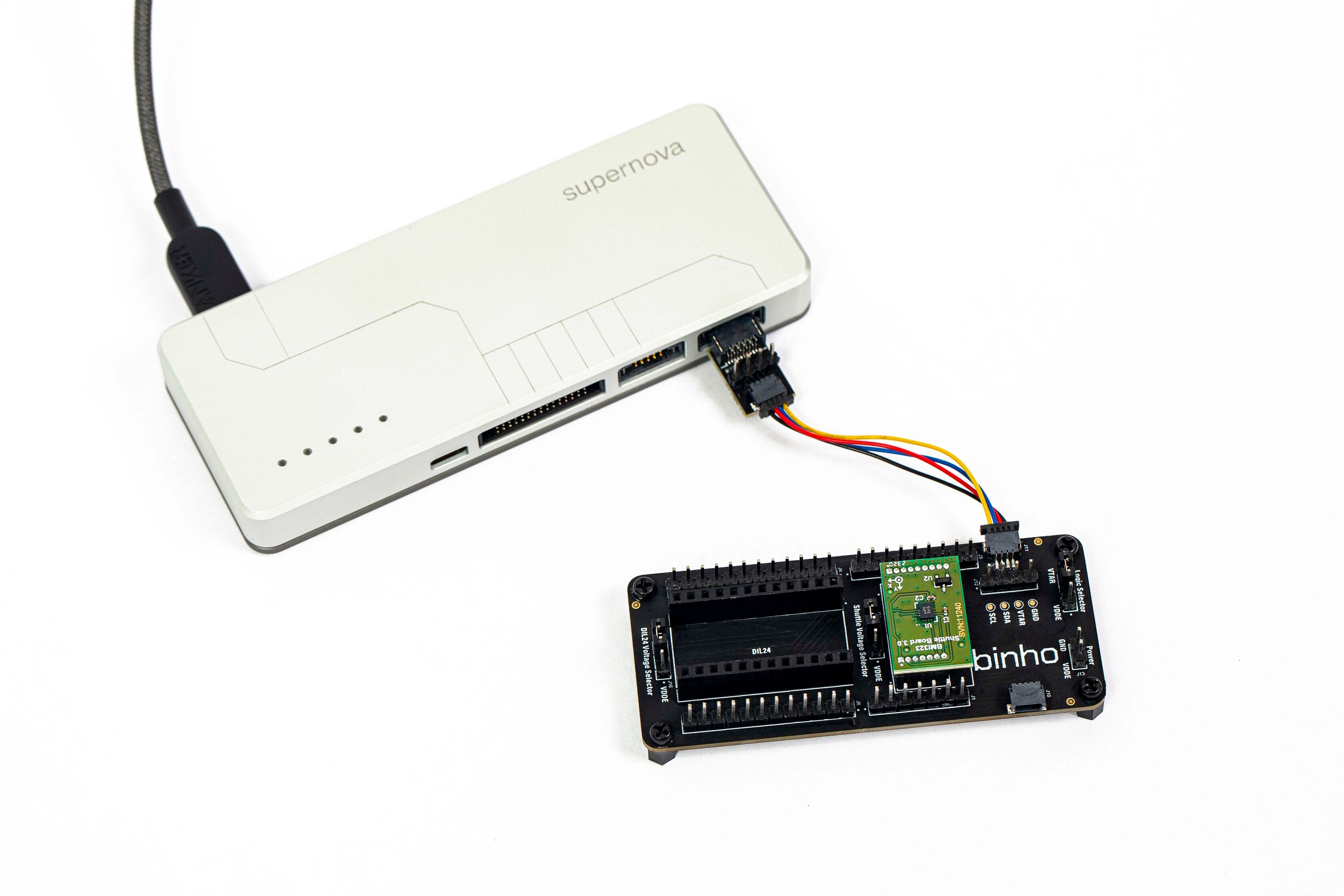
Our I3C Target Board accessory accepts Bosch's Shuttle 3.0 form-factor and STMicro's DIL24 evaluation boards — the two dominant sockets for I3C-capable sensor prototyping. Drop in your eval board, plug into the Supernova, decode the bus in seconds.
See the I3C Target Board// track record
We've been doing this for years.
Long enough to know where the gotchas live.

// 01 · standards
We help write the spec.
Binho is a MIPI Alliance Contributor Member, actively shaping I3C, a foundational protocol for cutting-edge embedded systems.
// 02 · tools
We build the tools.
200+ semiconductor companies use Binho tools to develop, validate, and ship devices with I3C support.
// 03 · plugfests
We prove it in the field.
We've verified our tools at the past 4 MIPI I3C Plugfests, and helped others verify theirs too.
// trusted by engineering teams at










+ hundreds more
// faq
Common questions.
What I3C features does it support?
The Supernova is an I3C controller and target up to 12.5 MHz, covering I3C Basic v1.0, v1.1.1, and v1.2, SDR and HDR-DDR modes, in-band interrupts (IBI), hot-join, and every Common Command Code in the spec.
Can it act as an I3C target, not just a controller?
Yes. The same hardware runs as an I3C controller to drive a bus, or as a target to validate a controller or a piece of silicon under test. No second tool required.
Does it handle mixed I²C and I3C buses?
Yes. The Supernova drives legacy I²C targets alongside I3C on the same bus, and also does SPI, UART, and GPIO, so a mixed-protocol board is one adapter, not several.
How do I control it: GUI, Python, or C?
All three. Mission Control 3 is a no-code GUI on Windows, macOS, Linux, and the browser. The Python packages on PyPI drop it into your test scripts and CI. And the Cosmic SDK gives you native C, C#, C++, and Java for production tools, all driving the same hardware.
Software and SDK downloads Can an AI agent use it as an I3C interface?
Yes. The Supernova ships an open, documented SDK, so Claude or any agent can initialize the I3C bus, run transfers, and verify against real silicon. It is hardware-in-the-loop access for agentic embedded development.
See AI-native development What voltage levels does it support?
From 0.8 to 3.3 V, wide enough for the modern low-voltage I3C silicon that fixed-voltage adapters can't reach.
The USB-to-I3C adapter,
done right.
Order the Binho Supernova today. In stock, shipping worldwide, and backed by the team that helps develop the I3C spec.
Buying for a team? Request a quote