// CMIS over I3C
Optical module management
meets I3C.
CMIS manages pluggable optical modules over its Management Communication Interface, today over I2C. The OIF has publicly announced work to add an I3C two-wire interface option to CMIS. As an OIF member and MIPI Alliance Contributor, Binho builds the I3C tools engineers use to bring up and validate the bus.
// the specification
Module management, defined by the OIF.
The Common Management Interface Specification (CMIS) is the OIF Implementation Agreement for how a host manages a pluggable module, such as a QSFP-DD, OSFP, or COBO optical transceiver. Management operations run over a Management Communication Interface (MCI), reading and writing a memory map the module exposes for identity, configuration, control, and diagnostic monitoring.
The published MCI today is the two-wire I2C-based variant, I2CMCI, joined by the SPI-based SPIMCI introduced in published CMIS 5.3. The OIF has publicly announced work to add an I3C two-wire interface option to CMIS.
// how it works
A host, the MCI, and the module.
The host walks the module’s CMIS memory map over the Management Communication Interface, reading and writing the pages that hold identity, configuration, control, and diagnostics.
// the host
The host
The host configures and monitors each module: it reads identity and capabilities, sets operating modes, and polls diagnostics, all as reads and writes to the module over the Management Communication Interface (MCI).
// the interface
The Management Communication Interface
CMIS carries management over an MCI. The published interface today is the two-wire I2C-based MCI (I2CMCI). The OIF has publicly announced work to add an I3C two-wire interface option to CMIS.
// the module
The CMIS memory map
CMIS defines the management memory a module exposes: a 256-byte addressable window, with 128-byte pages of a larger memory space switched into its upper half. The host walks that memory to bring the module up and keep it healthy.
// the operations
Monitor and control
Across that memory the host runs the full management lifecycle: discover identity and capabilities, configure and control the module, and continuously monitor diagnostics and telemetry. This is the management lifecycle CMIS defines today.
// the tools
Bring it up. See the bus.
The Supernova drives the management bus as an I3C controller, or stands in as a target, so you can exercise CMIS register access before the silicon is final. The CMIS Protocol Analyzer decodes the management interface so you read pages, banks and named fields, not raw bytes.
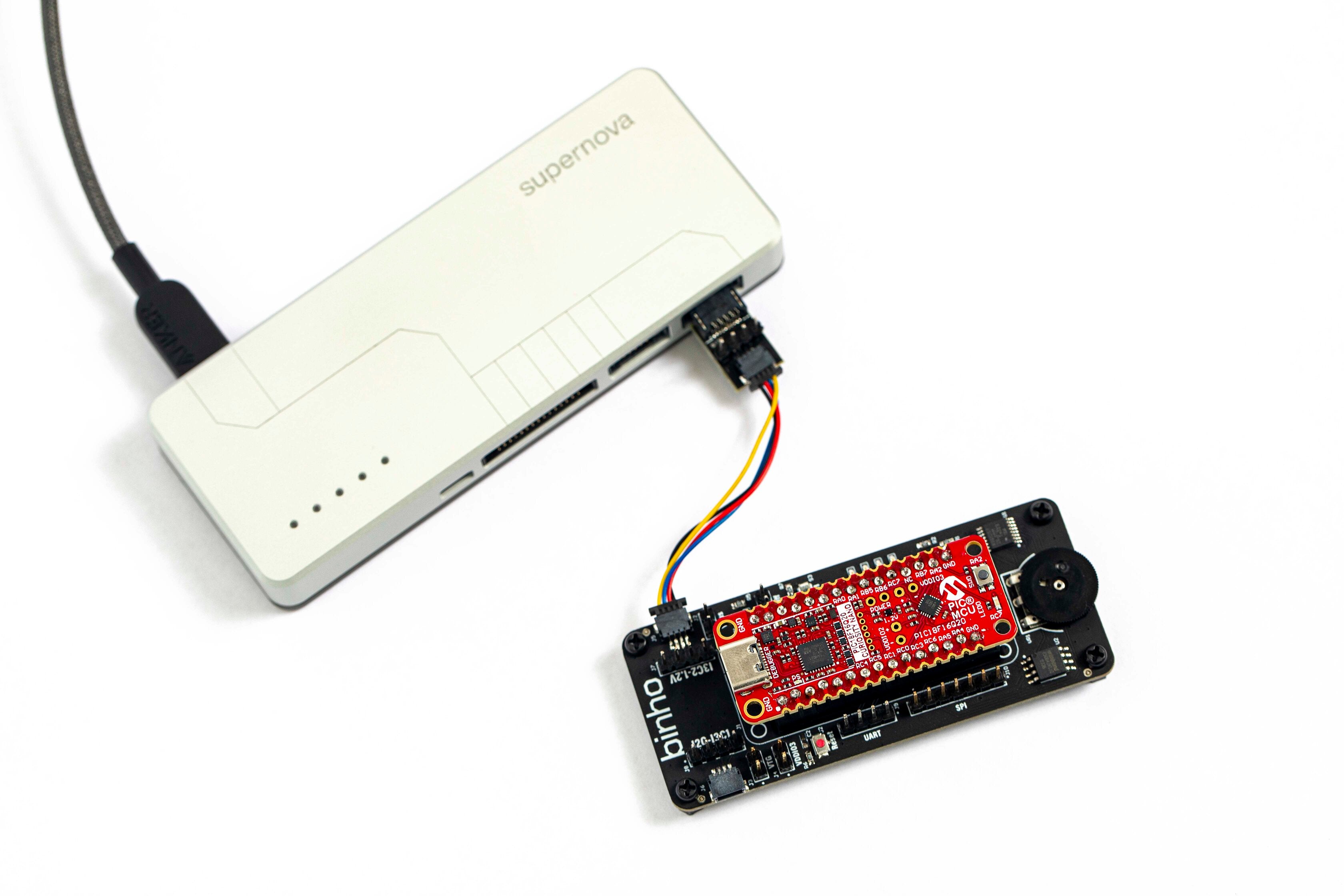
Hardware · USB Host Adapter
Binho Supernova
Drive the management bus.
The Supernova is a full I3C controller or target: bring up the bus, run dynamic addressing, read and write a module’s memory map, and handle in-band interrupts. Script it from a GUI, Python, or C.
- Controller or target on the I3C bus
- Register read/write, IBIs, dynamic addressing
- Scriptable from a GUI, Python, or C
Software · Saleae Plugin
CMIS Protocol Analyzer
Read the register map.
The CMIS Protocol Analyzer decodes the management interface at register level, pages, banks and named fields, inside the Saleae Logic 2 tool your team already uses.
- Decodes the published I2CMCI and SPIMCI
- Pages, banks and named fields, not raw bytes
- CMIS 5.2 / 5.3 / 5.4, in Saleae Logic 2
// our edge
Where CMIS meets I3C.
CMIS comes from the OIF; I3C comes from the MIPI Alliance. The OIF has publicly announced work to add an I3C two-wire interface option to CMIS. Binho is a member of the OIF, and a MIPI Alliance Contributor building the I3C tools the ecosystem relies on. Few teams work across both.


A seat in both
Binho is a member of the Optical Internetworking Forum, where CMIS is defined, and a MIPI Alliance Contributor Member shaping the I3C specification underneath it.
Semiconductor teams
200+ semiconductor companies use Binho tools to develop, validate, and ship devices with I3C support.
MIPI I3C Plugfests
We’ve verified our tools at the past 4 MIPI I3C Plugfests, and helped others verify theirs too.
// trusted by engineering teams at














+ hundreds more
// faq
Common questions.
What is CMIS over I3C?
CMIS, the Common Management Interface Specification, is the OIF Implementation Agreement for how a host manages a pluggable module such as a QSFP-DD or OSFP transceiver, carrying management over a Management Communication Interface (MCI). The published interface today is the two-wire I2C-based MCI (I2CMCI). The OIF has publicly announced work to add an I3C two-wire interface option to CMIS.
Is CMIS moving from I2C to I3C?
No. OIF’s public wording is that it is adding an I3C two-wire interface option to CMIS; the published I2C-based interface remains. Binho is a member of the OIF and a MIPI Alliance Contributor developing I3C tooling to support engineers as this work progresses.
What is available today?
The published CMIS management interface today is the two-wire I2C-based MCI (I2CMCI), which most deployed modules use, alongside the SPI-based SPIMCI introduced in published CMIS 5.3. The OIF has publicly announced work to add an I3C two-wire interface option to CMIS.
What Binho tools help with I3C module management?
The Supernova acts as an I3C controller to bring up and exercise a module’s management bus, or as a target to stand in for one, and the I3C Protocol Analyzer decodes I3C bus traffic. As an OIF member and MIPI Alliance Contributor, Binho is developing tooling to support engineers as OIF’s I3C interface work for CMIS progresses.
Explore the Supernova How does it relate to the other protocols over I3C?
I3C is carrying a growing set of management workloads: MCTP over I3C for platform management, JESD300 SPD for DDR5 memory, and the MIPI I/Os over I3C Bridge, each defined by its own standards body over the same I3C bus.
Explore the I3C protocol